10 Warning Signs of a Blocked Drain in Sydney
Introduction: The Hidden Threat Beneath Sydney Suburbs
Sydney is famous for its leafy, historic suburbs, from the classic terraces of Paddington and Newtown to the sweeping canopies of the North Shore. Yet, beneath these beautiful streets lies an aging network of underground drainage pipes that are under constant strain. Every single day, quiet plumbing issues slowly escalate into expensive emergencies.Many homeowners only think about their wastewater lines when water starts flowing back up through the kitchen sink or toilet. By that point, you are no longer dealing with a minor issue. You are facing a full-scale plumbing emergency that can lead to structural damage and severe hygiene issues.How can you protect your property and avoid thousands of dollars in emergency plumbing costs? The secret lies in early detection. Recognizing the early warning signs of a blocked drain can mean the difference between a quick, budget-friendly fix and a massive excavation job.This comprehensive guide breaks down the ten warning signs of a blocked drain in Sydney, explores the physical consequences of ignoring them, and provides actionable steps to restore your plumbing system.The True Cost of Delay: What Happens If You Ignore the Signs?
It is tempting to ignore a slow-draining shower or a faint gurgling sound behind your bathroom wall. Many people think they can get away with pouring some boiling water or supermarket chemical cleaners down the sink to delay the inevitable.However, ignoring the early signs of a blocked drain can lead to serious structural and financial consequences:- Can a blocked drain cause a leak? Yes, it absolutely can. When a blockage completely stops the flow of water, hydrostatic pressure builds up inside the pipe. This intense pressure forces water out through pre-existing joints, structural cracks, or weak seals. Over time, this escaping water washes away the supporting soil, causing sinkholes, cracked foundations, and concrete erosion.
- Structural and Sanitary Damage: When a main sewer line gets fully blocked, raw sewage has nowhere to go. It takes the path of least resistance, backing up into your baths, showers, and floor grates.
- Mould and Mildew Infestations: Slow leaks and standing wastewater create damp, humid environments behind plasterboard and under floorboards. This results in toxic black mould, which poses real health risks to children and elderly family members.
10 Warning Signs of a Blocked Drain
Keep a close eye and ear out for these ten common drainage problems in Sydney homes.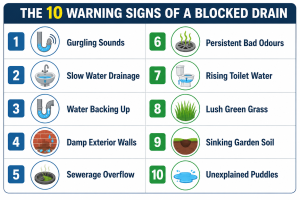
1. The Dreaded Gurgling Drain
If you hear a distinct glugging, bubbling, or gurgling sound from your bathroom sink, shower, or toilet after you run water, your pipes are trying to tell you something.A gurgling drain is caused by trapped air bubbles. When a blockage begins to restrict the path inside a pipe, the water is forced to squeeze through a smaller space, trapping pockets of air. As this air is pushed back through the standing water, it creates that familiar gurgling sound.2. Slow Water Drainage
Does water pool around your ankles in the shower? Does your kitchen sink take several minutes to completely empty after you wash the dishes?Slow water drainage is one of the most reliable early signs of a blocked drain. It indicates that a restriction, such as hair, soap scum, or grease, is steadily narrowing the inner diameter of your pipe.3. Water Backing Up in the Sink or Shower
There is nothing more alarming than watching soapy, dirty water travel back up your pipes. If you turn on your kitchen tap and experience water backing up in sink lines, or if running the washing machine causes dirty water to pool in your shower drain, you are facing a significant blockage downstream.4. A Persistent Bad Smell Coming From the Bathroom Drain
Have you noticed a foul, sulfur-like, or rotting odor in your bathroom, even after deep cleaning the entire room?A bad smell coming from bathroom drain lines or a bad smell coming from bathroom sink drain points is usually caused by trapped organic matter. Food scraps, hair, soap residue, and grease can get caught in the pipes, slowly decaying over time and releasing unpleasant gases back into your home.5. Toilet Water Levels Rising Dangerously High
When you flush your toilet, the water should swirl and empty quickly. If the water level rises right up to the rim before slowly draining away, you are dealing with a blocked toilet drain. This is a high-priority issue that usually indicates a clog in the main sewer line.6. Wastewater Overflowing Outside Your Home
Most Sydney properties have an Overflow Relief Gully (ORG) installed outside. This is a small drain grate located in your garden or near an external wall.If your main sewer line is blocked, the ORG is designed to release the overflowing wastewater outside, keeping raw sewage from flooding your carpets and bathrooms. If you see wet, foul-smelling patches around this external grate, you have a blocked sewer drains Sydney emergency.7. Unusually Lush, Green Patches in the Garden
While a beautiful, vibrant garden is usually a source of pride for Sydney homeowners, a single strip of grass that is noticeably greener, softer, and faster-growing than the rest of your lawn is a major red flag. This symptom is highly common in older suburbs where tree roots target subterranean clay pipes. The roots break into the pipe, feed on the nutrient-rich wastewater, and fertilize the grass directly above.8. Damp Spots or Cracks on Concrete and Walls
When a blocked drain pipe outside your home begins to leak underground, the moisture can seep into surrounding brickwork, driveways, and concrete paths. If you notice unexplained damp patches or fresh cracks appearing on exterior brick walls or paved areas, a blocked, leaking drainage line is often the culprit.9. Sinking Soil or Localised Sinkholes
If the soil in a specific part of your garden or lawn starts to sink, it means escaping water from a cracked, blocked pipe is washing away the underground dirt. This creates a hollow void under the surface that can quickly collapse into a small sinkhole.10. Unexplained Standing Water or Puddles on Your Property
If it has not rained for several days but you notice persistent puddles of water pooling in your yard, particularly near your external drainage lines, your stormwater or sewer pipes are likely overflowing underground. This indicates that you are dealing with blocked stormwater drains sydney systems or a major sewer line failure.Interactive Drainage Health Checklist
To help you assess the condition of your home’s pipes, run through this quick self-diagnostic checklist.- [ ] Do you hear gurgling sounds from any of your drains or toilets?
- [ ] Does water pool around your feet during a standard shower?
- [ ] Have you noticed a persistent, musty smell coming from any household grate?
- [ ] Does your toilet bowl water rise higher than usual when flushed?
- [ ] Do you have established trees growing within 15 metres of your property line?
- [ ] Is there a localized damp spot or unusually lush patch of grass in your garden?
Risk Profile Evaluation:
- 0–1 Boxes Checked: Low Risk. Your system appears to be working normally, but keeping up with good drain habits is always a smart idea.
- 2–3 Boxes Checked: Moderate Risk. You are seeing early signs of a restriction. It is wise to book a professional inspection to address the issue before it gets worse.
- 4+ Boxes Checked: High Risk. Your drainage system has a major structural blockage or leak. Contact a licensed blocked drain plumber Sydney as soon as possible.
What Actually Causes Blocked Drains in Sydney?
While there are many individual issues that can trigger a plumbing emergency, the vast majority of blockages in local properties boil down to three main factors:1. Invasive Tree Roots
This is the single most common cause of major sewer and stormwater blockages across Sydney’s leafier suburbs, such as the North Shore and the Inner West. Tree roots naturally seek out moisture and nutrients. They enter underground pipes through microscopic joints or cracks and grow into massive, dense root networks that completely stop the flow of water.2. Hardened Grease and Cooking Oils
Poured liquid fat, oil, and grease down your kitchen sink solidifies once it hits the cold underground pipes. Over time, this sticky layer traps passing food scraps, coffee grounds, and debris, slowly narrowing the pipe until water can no longer pass through.3. Non-Flushable Wipes and Foreign Objects
Many sanitary wipes, baby wipes, and makeup remover pads are marketed as “flushable”. However, they do not break down in water like toilet paper does. Instead, they catch on rough pipe joints or roots, creating tough, impenetrable blockages.How to Clear a Blocked Drain: DIY vs. Professional Methods
If you are currently facing a blockage, you might be wondering how do I clear a blocked drain or how to clear blocked drain pipe systems without spending a fortune. Here is a realistic look at your options, from basic DIY methods to advanced professional solutions.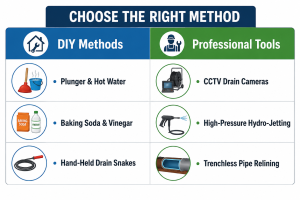
Standard DIY Methods (For Minor Clogs Only)
- Hot Water and Dish Soap: For minor kitchen blockages caused by light grease build-up, pouring a kettle of very hot (not boiling) water mixed with a squirt of dish soap can help melt and flush away the residue.
- Baking Soda and Vinegar: A classic, chemical-free option for a blocked bathroom drain or sink. Pour half a cup of baking soda down the drain, followed by half a cup of white vinegar. Let the foaming mixture sit for 30 minutes, then flush it through with warm water.
- The Trusty Plunger: A standard cup plunger is great for clearing minor toilet and basin clogs by using manual pressure to break up loose debris.
Professional Methods (For Stubborn or Structural Blockages)
When DIY methods fail, or if you are dealing with recurring blocked drains, you need the expertise of a professional plumber blocked drain sydney team.- CCTV Drain Camera Inspections: A plumber feeds a high-definition, waterproof camera into your sewer or stormwater pipes. This allows them to see the exact location, depth, and cause of the blockage, taking the guesswork out of the repair.
- High-Pressure Hydro Jetting: Using specialized truck-mounted equipment, plumbers blast water at pressures up to 5,000 PSI down your pipes. This process easily slices through tree roots, grease walls, and heavy debris.
- Trenchless Pipe Relining: If the blockage has damaged the structural integrity of your pipes, trenchless relining allows plumbers to insert a seamless, resin-coated sleeve inside the old pipe. Once cured, it creates a brand-new pipe within the old one, completely sealing off cracks and keeping tree roots out without the need to dig up your garden or driveway.
How Much Does It Cost to Clear a Blocked Drain in Sydney? (2026 Price Guide)
Plumbing costs in Sydney can vary depending on the severity of the blockage, how deep your pipes are buried, and your suburb. Here is a realistic look at current average pricing in Sydney:| Blockage Severity / Service | Estimated Price Range (AUD) | Ideal For |
| CCTV Drain Camera Inspection | $200 – $350 | Pinpointing hidden pipe cracks, root entry, or foreign objects. |
| Minor Blockage (Sink/Shower/Toilet) | $100 – $300 | Clears simple hair, soap scum, or toilet paper clogs using basic tools. |
| Hydro-Jetting / Tree Root Removal | $300 – $600 | Heavy-duty clearing of invasive roots, grease, and main sewer clogs. |
| Blocked Stormwater Drain Clearing | $200 – $600 | Removing leaves, silt, and dirt buildup after heavy Sydney rainstorms. |
| Emergency After-Hours Callout | $150 – $300 / hr | Urgent plumbing help on weekends, public holidays, or late at night. |
| Trenchless Pipe Relining (per metre) | $400 – $1,200 | Permanently repairing cracked or broken pipes without excavation. |
Practical Tips to Prevent Blocked Drains
The best way to deal with a blocked pipe is to stop it from happening in the first place. These simple preventative habits can keep your drains running clear:- Install Mesh Drain Catchers: Use simple silicone or stainless steel mesh covers over your shower and bathtub grates to catch hair and soap scum before they slip down the drain.
- Follow the “Three Ps” Rule: Only flush Pee, Poo, and Toilet Paper down the toilet. Everything else, including wipes, sanitary items, cotton buds, and paper towels, belongs in the bin.
- Dispose of Grease Correctly: Never pour cooking oil or bacon fat down your kitchen sink. Let it cool, scrape it into a container, and throw it in the general rubbish bin instead.
- Clear Outdoor Gutters Regularly: Keep your gutters, valleys, and downpipes free of leaves and garden debris, especially before Sydney’s storm season, to prevent stormwater blockages.